

Step One
Exam & Images
Dr. Nakhla checks the gap, the anchor teeth and your gums with digital X-rays and the intraoral camera.
Is a gap in your smile showing up in photos or catching food? Dental bridges in Independence, KY, fill the space with a natural-looking tooth anchored to the teeth beside it. Dr. Nakhla helps you smile fully and chew comfortably on both sides again.
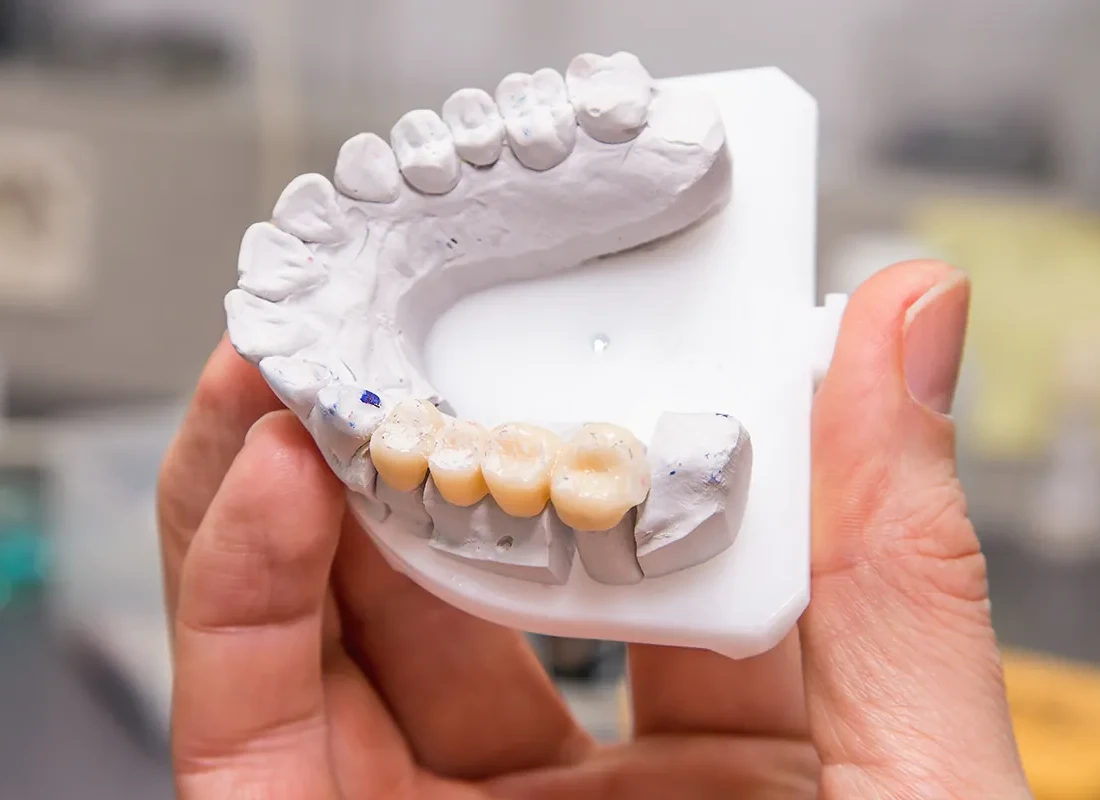
A dental bridge replaces a missing tooth by filling the gap with a false tooth, called a pontic. A traditional bridge is one joined piece, with a crown over the healthy tooth on each side of the gap holding the pontic in the middle.
The whole bridge is cemented in place, so you brush it like your own teeth and never take it out. A bridge also keeps the teeth around the gap from drifting out of position.
One tooth, or two or three in a row, can be replaced with a bridge that closes the gap.
Healthy teeth on each side of the gap can carry the load and anchor the bridge.
If the teeth beside the gap already need crowns, a bridge puts that work to double use.
If you would rather skip surgery, or an implant is ruled out by your health or bone, a bridge is a good option.
Dr. Nakhla checks the gap, the anchor teeth and your gums with digital X-rays and the intraoral camera.
Dr. Nakhla explains your options and recommends a way to replace the missing tooth based on your exam.
Once the area is numbed, the anchor teeth are shaped and a precise copy of them is taken so the bridge fits.
A temporary bridge protects the shaped teeth while your final bridge is made.
The final bridge is checked for fit, bite and shade, adjusted if needed and cemented.
A bridge is cemented in, so there is nothing to take out at night.
The work happens on the teeth beside the gap, with no post placed in the bone.
Filling the space helps stop the nearby teeth from drifting and keeps food from packing in.
The false tooth is shaped and shaded to sit naturally beside your own teeth.
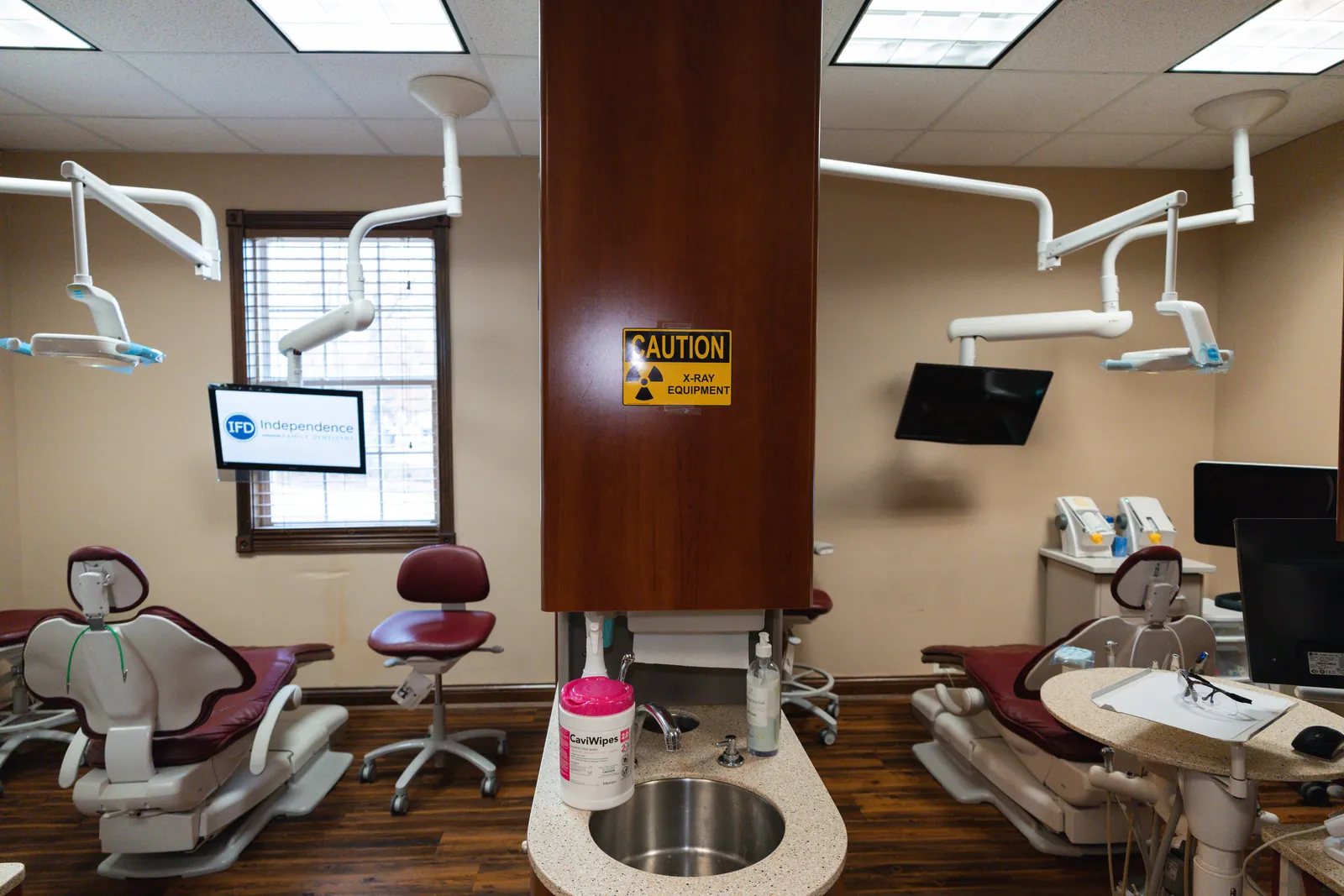
Digital X-rays and an intraoral camera put pictures of the gap and anchor teeth on a monitor, so you see the fillings, cracks or decay Dr. Nakhla is talking about.
Bridges, dental implants and partial dentures are all offered here, so Dr. Nakhla can walk you through your choices in one visit.
Dr. Nakhla has advanced training in dental implants and cosmetic dentistry, and he will say honestly which option protects your teeth best.
The treatment rooms have Netflix, blankets and music, and you can ask about sedation dentistry if dental work makes you nervous.
Fill the gap and smile with confidence again. Request your consultation for dental bridges in Independence, KY, and walk through your options with Dr. Nakhla. Fill out the form or call 859-356-2000.
FAQs
With good cleaning underneath it and regular checkups, a bridge can last many years. Decay at the anchor teeth and heavy grinding are the usual reasons one fails early, and a night guard helps if you grind.
The anchor teeth are numbed first, so you feel pressure rather than pain. The teeth and gums can feel tender for a few days afterward.
Floss cannot slide under the false tooth in the usual way, so a floss threader or water flosser cleans beneath it. Checkups let us watch the edges of the anchor crowns, where decay can start.
A bridge stays in and feels more like your own teeth. A partial comes out, needs less work on the neighboring teeth and is easier to add to later, so the right choice depends on your gaps.
Yes. The anchor teeth are shaped down to make room for their crowns, and that cannot be undone. If they are healthy and untouched, Dr. Nakhla may suggest a dental implant, an implant-supported bridge or a partial instead.
Yes. A loose or chipped bridge, or one with decay underneath, may need to be replaced. Dr. Nakhla checks the bridge and reviews your X-rays before recommending the next step.
Dental insurance often helps with this kind of treatment. Our team verifies your benefits before you start, so you know what to expect.