
Step One
Exam and 3D Scan
We examine the area and take a 3D scan that shows the height, width and shape of your jawbone.
Rebuild the Bone Your Implant Needs
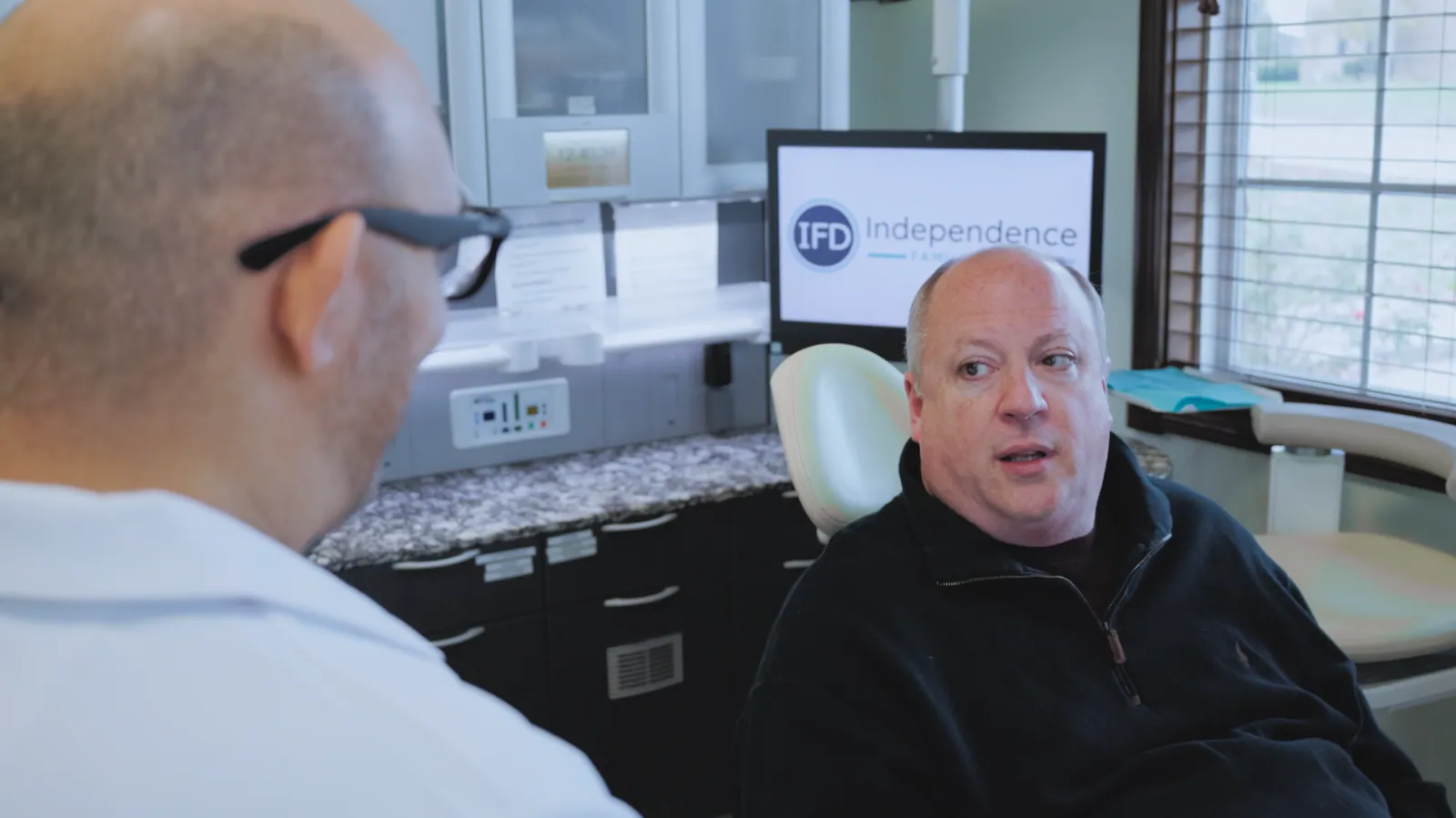
Were you told there isn't enough bone for a dental implant? Bone grafting in Independence, KY, adds bone to the jaw so a missing tooth can still be replaced from the root up. Dr. Nakhla looks at your 3D scan with you and explains whether a graft would help.
A bone graft adds bone, or bone-like material, to the jaw where bone has been lost. After a tooth is removed, or has been missing for a long time, the bone around it can shrink. A dental implant needs enough bone to hold it, so a graft is sometimes placed first, or at the same time, to build that support.
Over the following months, your own bone grows into and around the graft material. Dr. Nakhla uses digital X-rays and a 3D scan to see whether you need a graft and plan your treatment.
When a tooth comes out, the socket can shrink. A graft placed at that time can help hold the bone for a future implant.
Bone thins when it has no tooth root to support, so an older gap may need rebuilding before an implant.
Advanced gum disease can wear the bone down around a tooth. A graft may help in some cases.
Your 3D scan may show a jaw that is too thin or too short for an implant. A graft can add what is missing.
We examine the area and take a 3D scan that shows the height, width and shape of your jawbone.
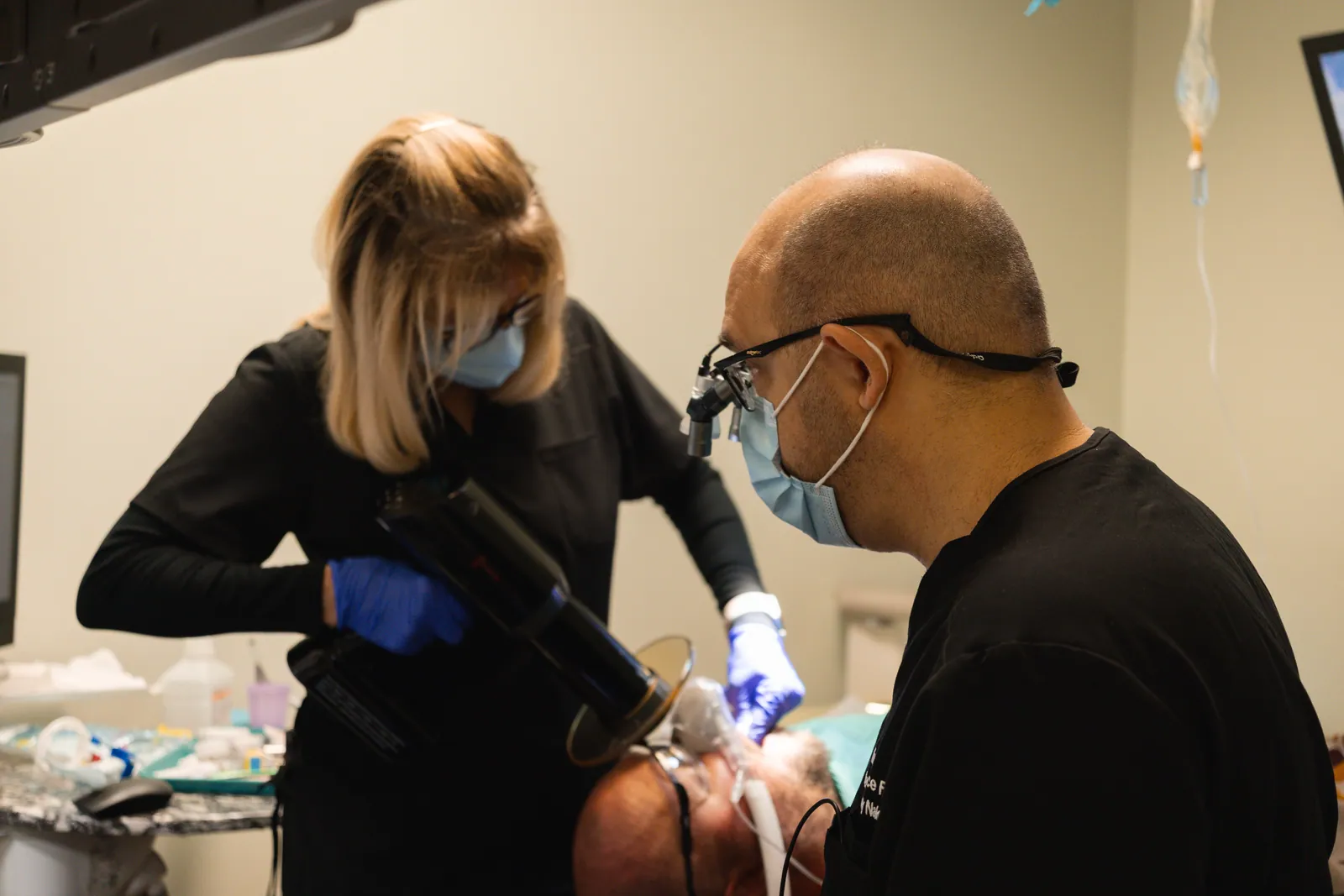
If sedation is part of your treatment plan, it begins before we numb the area.
Graft material is placed where bone is needed and covered so it can stay in place while you heal.
Your own bone grows into the graft over time. Dr. Nakhla tells you what to expect and when he wants to see you.
Once the area is ready, your implant can be planned and placed. Some patients have a graft and an implant at the same visit when the bone allows it.
A graft adds bone where it has thinned, so an implant can sit in a jaw that holds it firmly.
Our CBCT scanner shows the amount and location of bone so Dr. Nakhla can plan the graft.
Graft material can come from your own bone, a donor or a synthetic source. Dr. Nakhla explains which suits your case.
The area is numbed, and IV sedation is available in our office if you would like help relaxing.
Our CBCT scanner shows the bone, nerves and sinuses in three dimensions, which helps us plan a graft and an implant together.
Dr. Nakhla offers IV sedation for bone grafting. Your vital signs are monitored throughout the procedure. You will need a friend or family member to drive you home afterward.
The same team plans your graft and your dental implant.
If you have been told you may not have enough bone for an implant, it is worth a second look. Request your visit for bone grafting in Independence, KY, and talk through your options with Dr. Nakhla. Fill out the form or call 859-356-2000.
FAQs
The area is numbed first, so you should feel pressure rather than sharp pain. Some tenderness and swelling afterward is normal. Tell Dr. Nakhla if you feel pain during the visit so he can adjust the numbing.
Many people have enough bone for an implant. Dr. Nakhla checks your digital X-rays and 3D scan and tells you before any treatment begins.
Graft material can come from your own bone, from a human or animal donor source, or from a synthetic material. Dr. Nakhla explains the options and recommends the one that fits your case.
Healing time varies with the size of the graft and how your body heals. Dr. Nakhla gives you a timeline for your case and tells you when your implant can be placed.
Often, yes. Placing graft material in the socket at the time of an extraction can help keep the bone ready for an implant later.
The cost depends on how much bone is needed and the type of graft material. We go over the fee with you before treatment.
Coverage varies by plan. Our team checks your benefits before the visit and explains what your plan may pay.