

Step One
Exam and Scan
Dr. Nakhla examines the tooth and uses X-rays or a 3D scan to see how much tooth and bone there is.

Room for a Crown That Lasts
Has a tooth broken off so close to the gum that there is little left to hold a crown? Crown lengthening in Independence, KY, moves the gum back so a new crown can hold and you can keep that tooth. Dr. Nakhla will walk you through the plan and help you get back to eating comfortably.
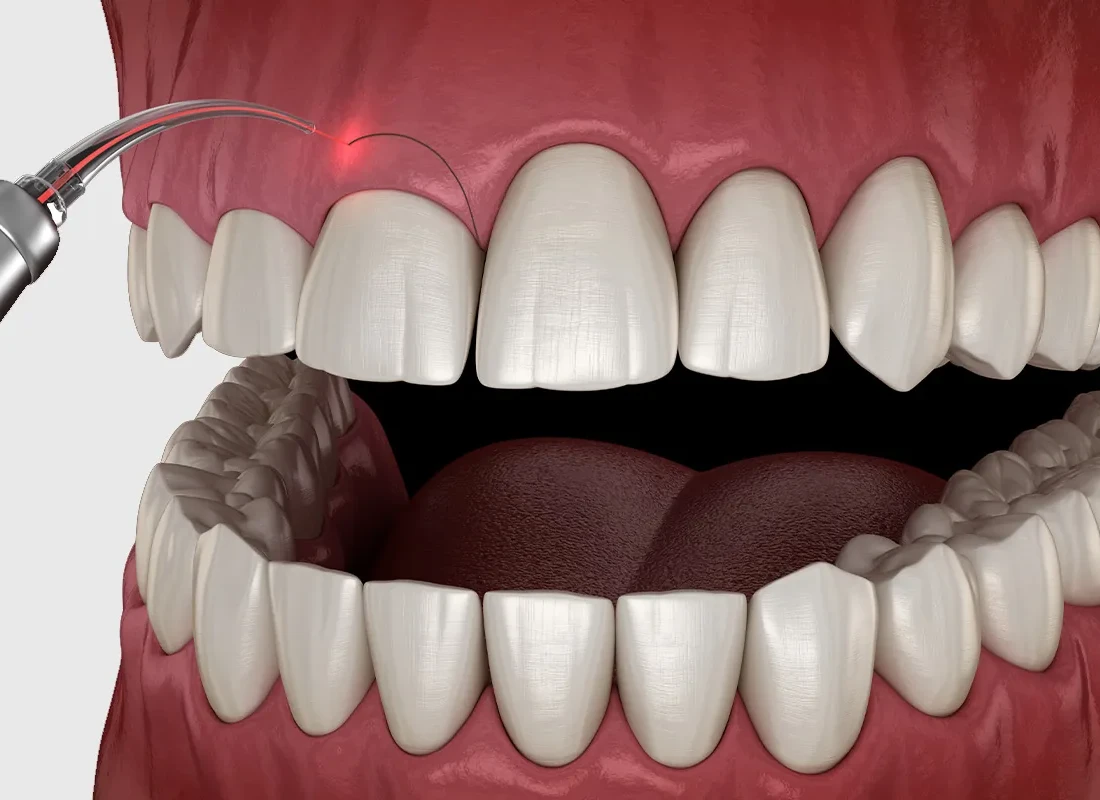
A crown holds on by wrapping around the tooth, so it needs a band of solid tooth above the gumline to grip. When a tooth has snapped near the gum or decay has spread underneath, there may be too little left for a crown to stay put.
Crown lengthening gently moves the gumline down the root and, if needed, smooths a small amount of bone. More of your tooth is uncovered, which gives the crown a firm hold and lets the gum stay healthy around its edge.

A tooth that snapped level with the gum, or a little under it, may need more height.
Decay that has spread under the gumline can leave too little tooth for a crown.
A tooth with little left after a root canal may need room for a crown to hold.
If a crown keeps coming off because the tooth beneath it is too short, crown lengthening may help.
Some teeth also need a post and core first. This is a small post in the root with a buildup on top that gives the crown a solid base.
Dr. Nakhla examines the tooth and uses X-rays or a 3D scan to see how much tooth and bone there is.
The area is numbed so you can rest comfortably while he works.
The gum is opened or trimmed, and a small amount of bone is smoothed if needed to expose more tooth.
The gum is placed snugly around the tooth, often with a few stitches, and a temporary crown may protect it.
Once the gum has settled at its new level, your final dental crown is made.
It can expose enough tooth for a crown, which may help you keep a badly broken tooth.
More tooth to grip means a crown that is less likely to come loose.
The crown edge sits where the gum can stay healthy and you can clean around it.
Our own CBCT 3D scanner shows how much tooth and bone there is to work with.
Dr. Nakhla handles crown lengthening, post and core buildups and crowns here, including same-day CEREC crowns.
Our CBCT 3D scanner shows your tooth and jaw, and Dr. Nakhla walks you through it on screen.
If too little tooth would remain even after lengthening, he explains the reasoning with your scan and X-rays.
Our rooms have Netflix, blankets and music. Dr. Nakhla can also review whether IV sedation is appropriate if dental visits make you anxious.

A broken tooth or a crown that will not stay put is worth a closer look. Request a consultation for crown lengthening in Independence, KY, and find out if it can give your crown a lasting foundation. Fill out the form or call 859-356-2000.
FAQs
Yes, a small one. It is done with the area numbed, usually on one tooth or a few teeth side by side.
Both reshape the gum. Crown lengthening is done so a tooth can be repaired and may include a little bone, while gum contouring is cosmetic and trims only gum to change how a smile looks.
A little, because more of it shows above the gum. On a back tooth that rarely matters, and on a front tooth Dr. Nakhla plans the new gumline to match the teeth beside it.
That depends on how much tissue was reshaped and how your gum heals. You wear a temporary crown in the meantime, and Dr. Nakhla checks the gum before the final crown is made.
When too little tooth would remain even after lengthening, or the root is cracked, Dr. Nakhla recommends removing it and replacing it with a dental implant or a bridge.
Eat soft foods and chew on the other side for the first few days. Keep the area clean with gentle brushing and follow the rinse and stitch care instructions from your visit.